The Complete Guide to Contrast Therapy (Hot & Cold)
The complete guide to contrast therapy: how hot and cold protocols work, indicative temperatures and costs, plus how operators build a contrast journey.
Contrast therapy is the practice of alternating between heat (such as a sauna) and cold (such as an ice bath) in a single recovery session. The hot phase warms the body and the cold phase cools it, and cycling between the two is associated in peer-reviewed research with recovery and a refreshed, restorative feeling. A typical session alternates several rounds of heat and cold, finishing on cold.
What is contrast therapy?

Contrast therapy – sometimes called hot-and-cold or contrast water therapy – involves deliberately moving between a hot environment and a cold one. The principle is simple: heat encourages the body to warm and relax, cold prompts it to cool, and the rhythmic alternation creates an invigorating recovery ritual. It is one of the most popular recovery formats for commercial facilities because it is social, repeatable and pairs two compelling modalities. The cold side typically draws on the Helix Cold collection and the heat side on the Helix Heat collection.
How does a contrast therapy protocol work?
A common structure alternates rounds of heat and cold, usually finishing on cold. Protocols vary by individual and facility, but an indicative session looks like this:
| Phase | Indicative temperature | Indicative duration | Rounds |
|---|---|---|---|
| Heat (sauna) | 70 – 100°C (traditional) | 10 – 15 mins | 3 – 4 |
| Cold (ice bath) | 3 – 10°C | 1 – 3 mins | 3 – 4 |
| Rest between | Ambient | 1 – 2 mins | As needed |
These are indicative, typical ranges only; individuals should ease in gradually, and individual results vary. The equipment used is wellness equipment, not a medical device, and contrast therapy is not intended to diagnose, treat or cure any condition.
What are the benefits associated with contrast therapy?
At the modality level, alternating heat and cold is associated in peer-reviewed research and practitioner use with post-exercise recovery, relaxation and a refreshed sense of wellbeing. The heat phase is associated with relaxation and circulatory effects, while the cold phase is associated with a stimulating, restorative response. As ever, benefits are framed at the modality level and individual results vary – the appeal for clients is as much about the ritual and the experience as any single outcome.
What equipment do you need for contrast therapy?
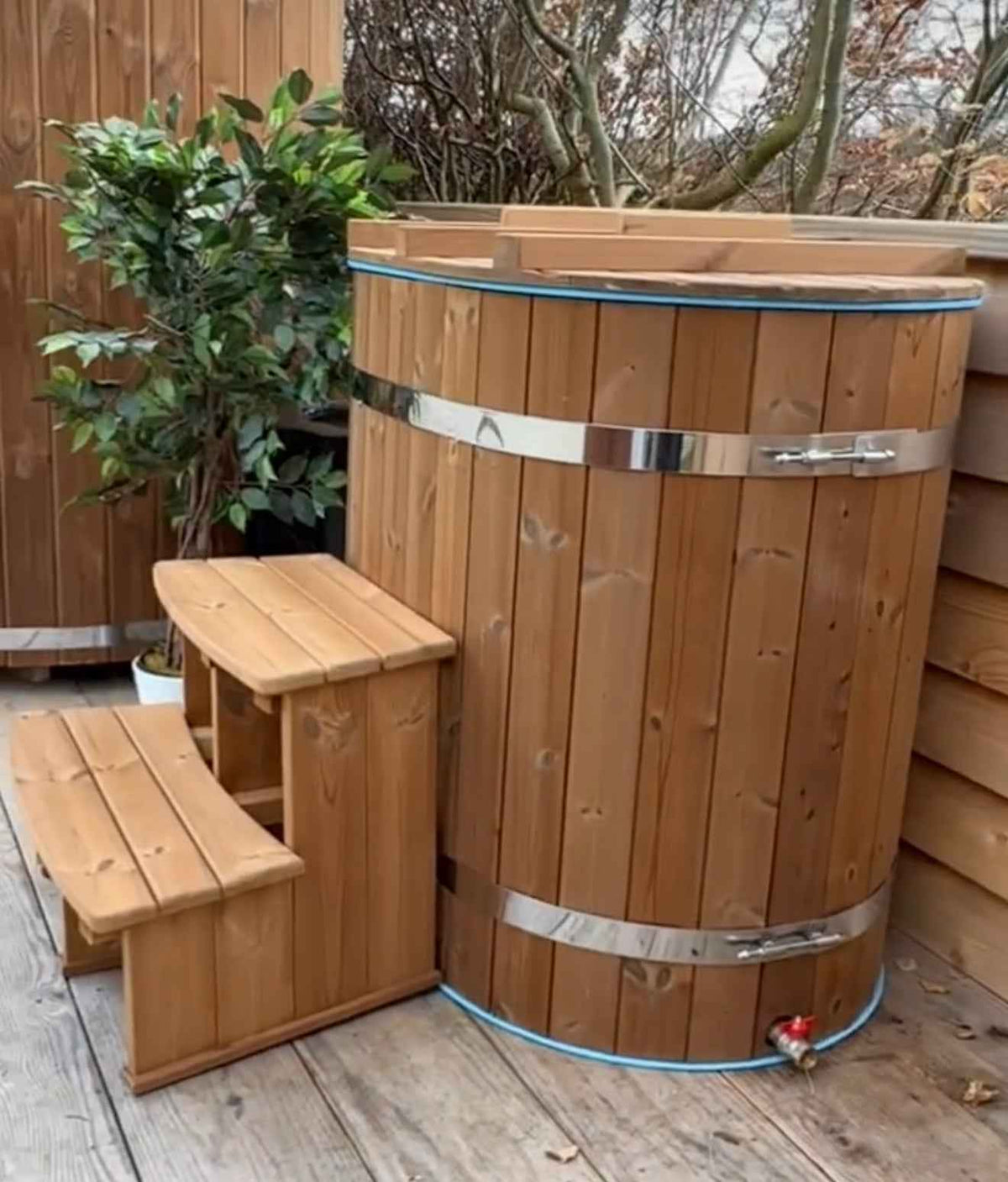
You need a reliable heat source and a reliable cold source positioned close together for easy transitions. On the cold side, a commercial-grade ice bath with chilling and filtration – such as the Helix Ice Bath Oval – holds consistent low temperatures for multi-user throughput. On the heat side, a sauna such as the Eldur Barrel Sauna provides the warming phase. Position the two within a few steps of each other, plan drainage and power, and provide clear signage and a brief induction so clients move safely between phases.
How do operators build a contrast journey?
The commercial opportunity is to package heat and cold into a guided journey rather than two separate amenities. Operators can sell timed contrast sessions, bookable group experiences or premium memberships. Throughput is strong because cold phases are short, and the experience encourages repeat visits. Indicative capital outlay for a paired set-up – one commercial ice bath and one sauna – commonly falls in the £9,000–£32,000 range depending on specification, with many operators targeting payback inside 12–24 months as utilisation builds. Individual results vary with footfall, pricing and running costs.
FAQ
Should I finish a contrast session on hot or cold?
Many protocols finish on cold for an invigorating end to the session, though preferences vary. The most important guidance is to ease in gradually and follow facility and manufacturer advice.
How cold should the ice bath be?
Commercial ice baths for contrast typically hold around 3–10°C. Newcomers may prefer the warmer end of that range and shorter immersions to begin.
Is contrast therapy safe for everyone?
It is a wellness practice, not a medical treatment. Operators should provide standard screening and advise clients who are pregnant, or who have cardiovascular or other health conditions, to consult a healthcare professional before use.
How long should a full session take?
An indicative session of three to four heat-and-cold rounds plus rests commonly runs around 30–45 minutes, though this varies by individual and protocol.
Can I offer contrast therapy in a small space?
Yes. A barrel sauna and a compact commercial ice bath can fit within a modest footprint, provided you plan drainage, power and safe circulation between the two.
Ready to build a contrast therapy journey clients will return for? Explore the Helix Cold collection and the Helix Heat collection, then request a quote and our team will help you pair the right hot and cold equipment for your space.