Electric vs Nitrogen Cryotherapy Chambers: The 2026 Buyer's Guide
Electric vs liquid-nitrogen cryotherapy for commercial use: safety, running costs, throughput and regulation compared in our 2026 buyer's guide.
For most commercial facilities in 2026, electric cryotherapy chambers are the smarter choice over liquid-nitrogen systems. Electric units expose the whole body to cold air rather than nitrogen vapour, removing asphyxiation risk, cutting consumable costs to near zero, and easing regulation, while delivering comparable cold exposure and higher throughput. Nitrogen still suits some legacy operators, but the running-cost and safety case increasingly favours electric.
What is the difference between electric and nitrogen cryotherapy chambers?

The two technologies achieve cold exposure in fundamentally different ways. Understanding that difference is the foundation of any sensible buying decision.
A liquid-nitrogen (LN2) cryosauna cools the body by evaporating liquid nitrogen, which floods the cabin with nitrogen vapour. The user typically stands in an open-top single-person pod with their head above the vapour. Skin-surface temperatures fall rapidly, but the air the client breathes must be managed, and nitrogen must be delivered, stored and refilled.
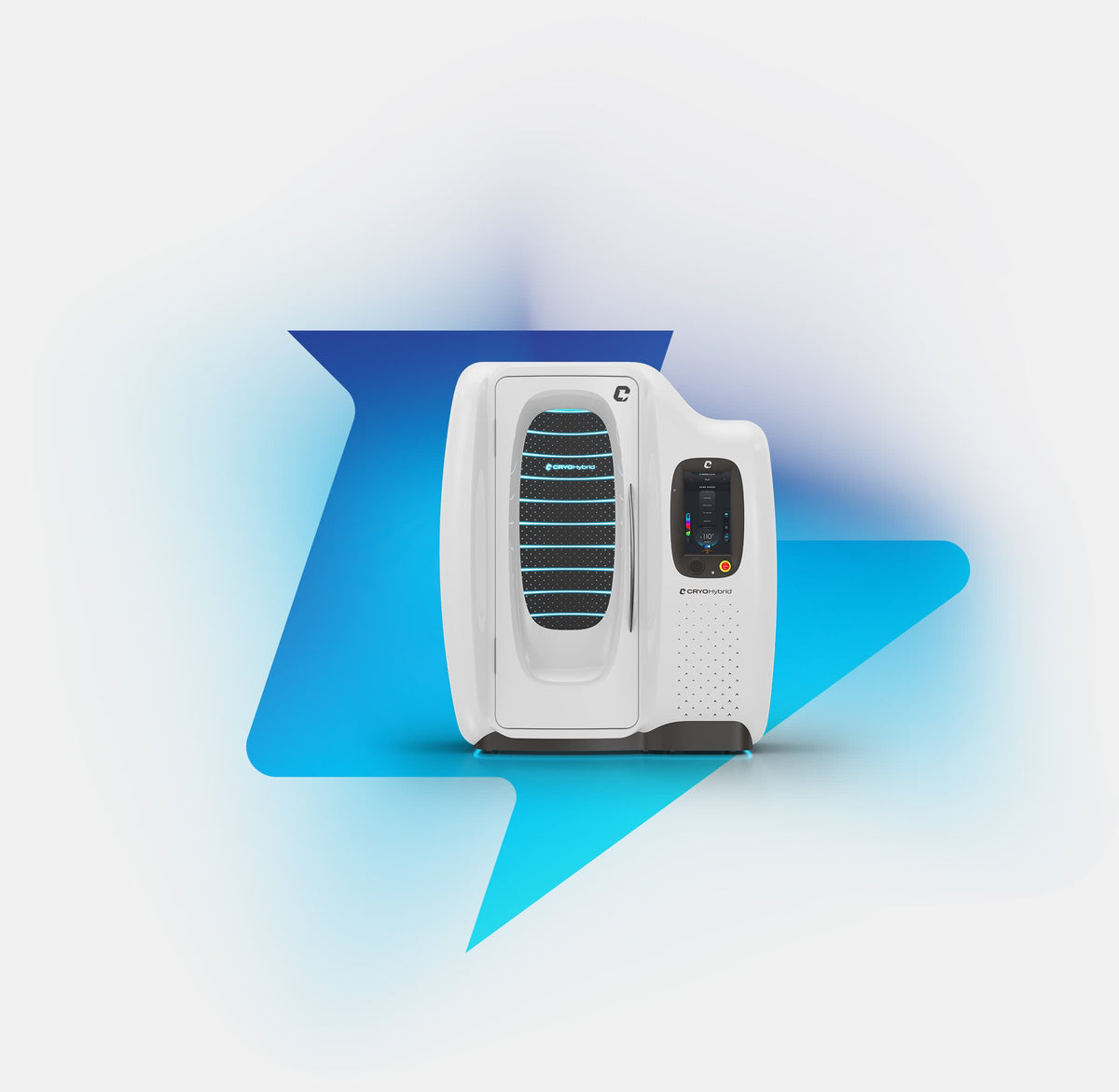
An electric (nitrogen-free) cryotherapy chamber uses a refrigerated electric cooling system to chill the air itself. There is no gas to inhale, no asphyxiation hazard and no consumable to reorder. Many electric chambers are walk-in, allowing a fully immersive whole-body experience with the head inside the treatment environment. Helix supplies the electric Cryo Hybrid chamber for exactly this reason.
Which is safer for commercial use?
Safety is where the gap is widest. Because LN2 systems displace oxygen with nitrogen, operators must manage the risk of oxygen depletion in the cabin and surrounding room. This is why nitrogen units keep the user's head above the rim and why oxygen monitoring and ventilation are standard precautions.
Electric chambers carry no asphyxiation risk because they cool ordinary air. There is no inhaled gas, no need for room oxygen sensors tied to nitrogen, and no pressurised cryogenic storage on site. For facilities with less specialist supervision, or that want clients to experience true whole-body immersion, electric is generally the lower-risk option. Individual results and suitability vary, and all users should be screened before any cold-exposure session.
How do running costs compare?
This is often the deciding factor. Nitrogen is a recurring consumable: a busy site can consume substantial volumes weekly, and prices fluctuate with the industrial-gas market. Delivery, cylinder or dewar rental, and refill logistics add further cost and admin.
Electric chambers convert almost entirely to electricity. There is no consumable to buy, so the marginal cost per session is simply the power drawn during cooling and standby. The figures below are indicative, typical ranges for UK commercial operation and will vary by usage, tariff and supplier.
| Factor | Electric chamber (indicative) | Nitrogen cryosauna (indicative) |
|---|---|---|
| Operating temperature | Approx. -85°C to -110°C (air) | Approx. -110°C to -140°C (vapour) |
| Consumable cost | None | ~£400–£1,200+ / month nitrogen |
| Energy cost per session | ~£1–£4 | ~£1–£3 (plus nitrogen) |
| Session length | ~2–4 minutes | ~2–3 minutes |
| Sessions per hour | ~8–12 (walk-in throughput) | ~6–10 |
| Whole-body immersion | Yes (head inside) | Partial (head above vapour) |
| On-site gas storage | Not required | Required |
| Indicative purchase price | ~£35,000–£90,000+ | ~£25,000–£55,000+ |
What about throughput and the client experience?
Throughput drives revenue, so it matters commercially. Electric walk-in chambers can typically cycle 8–12 clients per hour with short 2–4 minute sessions and quick turnarounds, because there is no vapour to clear and no refilling mid-day. Multi-person walk-in designs can serve groups together, which suits busy studios and team training environments.
The experience also differs. Nitrogen pods keep the head outside the cabin, so the face never enters the cold. Electric chambers immerse the whole body, which many operators position as a premium, more complete cold-exposure experience. Cold exposure is associated in peer-reviewed research with effects on perceived recovery, alertness and wellbeing, though individual responses vary and no specific outcome is guaranteed.
How much maintenance does each need?
Nitrogen systems add a logistics layer: scheduling deliveries, managing storage, monitoring levels and avoiding run-outs that cancel bookings. The cooling hardware itself is relatively simple, but the supply chain is a standing operational task.
Electric chambers shift maintenance toward the refrigeration system: routine servicing of the compressor and cooling circuit, filter checks and standard electrical inspection. There is no gas supply to manage. For most operators this is a more predictable, lower-admin maintenance profile. Helix supports installed units with servicing guidance across the range.
What are the UK regulatory considerations?
Both technologies sit in a health-adjacent space and should be operated with proper screening, staff training, clear contraindication policies and insurance. Nitrogen adds specific obligations around the safe storage and handling of cryogenic gas and the management of oxygen-depletion risk in the treatment room, which feed into your risk assessments under general workplace health-and-safety duties.
Electric chambers remove the cryogenic-gas dimension entirely, simplifying risk assessment. They are not, however, medical devices and should not be marketed as treating, curing or diagnosing any condition. Frame benefits at the modality level and always advise clients to seek medical advice where relevant.
Which should your facility choose?
If you are buying new in 2026, the electric case is strong: zero nitrogen cost, no asphyxiation risk, full-body immersion, strong throughput and simpler compliance. Nitrogen can still make sense for operators with established supply relationships or a specific lower-entry-price requirement. Compare options across the Helix cold therapy range, including the walk-in Cryo Hybrid and the compact Cryo Q-One.
FAQ
Is electric cryotherapy as cold as nitrogen?
Electric chambers typically run around -85°C to -110°C of chilled air, while nitrogen vapour can read colder at the skin. Because electric immerses the whole body in cold air rather than localising vapour, the overall cold-exposure experience is comparable for commercial purposes.
Do electric cryotherapy chambers need nitrogen refills?
No. Electric chambers cool ordinary air with a refrigeration system, so there is no nitrogen to buy, store or refill. This removes the single largest recurring consumable cost of a nitrogen cryosauna.
How many sessions can a commercial chamber run per day?
With 2–4 minute sessions and quick turnarounds, an electric walk-in chamber can typically serve 8–12 clients per hour, equating to dozens of sessions across a trading day depending on staffing and booking patterns.
Are cryotherapy chambers regulated as medical devices in the UK?
Commercial whole-body cryotherapy chambers are generally operated as wellness equipment, not medical devices, and must not be marketed as treating or curing conditions. Operators should screen clients, train staff and hold appropriate insurance.
What is the payback period on a commercial cryo chamber?
Payback depends on price, pricing per session and utilisation. A well-utilised electric chamber with low running costs can often recover its investment within roughly 12–30 months, though individual results vary with location and demand.
Ready to move on from nitrogen logistics? Explore the electric Cryo Hybrid and the wider Helix cold therapy collection, or request a tailored quote and throughput projection for your facility from the Helix team.