
Sauna vs Steam Room vs Infrared Sauna: Which Is Right for Your Facility?
Sauna vs steam room vs infrared sauna compared for operators: heat, humidity, running costs, indicative GBP pricing and the right fit for your venue.
The difference comes down to heat and humidity. A traditional sauna delivers dry heat at 80–100°C, a steam room offers near-100% humidity at a milder 40–50°C, and an infrared sauna warms the body directly at 45–65°C with low humidity. For a facility, the right choice depends on your audience, space, running costs and the experience you want to be known for. Helix supplies traditional and barrel saunas and steam rooms — we cover infrared here for a fair comparison, though it is not a format we stock. Each is a wellness amenity, not a medical device, and individual results vary.
How do the three heat experiences differ?

All three create a heat-based wellness ritual, but they feel very different and place different demands on a building. A traditional sauna heats the air to high temperatures with low humidity, producing the classic intense, dry sweat. A steam room saturates the air with moisture at a much lower temperature, giving an enveloping, humid warmth. An infrared sauna uses emitters to warm the body directly, so it feels comfortable at lower air temperatures with minimal humidity.
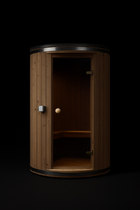
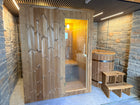
Helix supplies traditional saunas, barrel saunas and steam rooms for commercial settings — including the Eldur Barrel Sauna and the wider Helix Heat range. Infrared is included below purely for comparison.
Sauna vs steam room vs infrared: side by side
The table below summarises the practical differences. Pricing is indicative GBP to support planning and varies by size, finish and installation.
| Factor | Traditional sauna | Steam room | Infrared sauna |
|---|---|---|---|
| Temperature | 80–100°C | 40–50°C | 45–65°C |
| Humidity | Low (10–20%) | Very high (~100%) | Low |
| Warm-up time | 30–45 min | 15–30 min | 10–15 min |
| Running cost | Higher | High (water + heat) | Lower |
| Maintenance | Moderate | High (humidity control) | Low |
| Indicative cost (GBP) | £6,000 – £25,000 | £8,000 – £30,000 | £4,000 – £20,000 |
Which is right for your facility?
There is no single winner – the best choice tracks your audience and operating model.
When does a traditional sauna make sense?
If your guests expect an authentic, high-heat ritual – common in premium spas, Nordic-style wellness venues and serious performance settings – a traditional sauna is the benchmark, and carries the deepest evidence base for heat. It demands more power, a longer warm-up and good ventilation, but the experience is hard to beat for purists. This is where Helix focuses.
When is a steam room the better fit?
Steam rooms suit spas and hotels positioning a humid, indulgent experience, and guests who find dry heat harsh often prefer them. The trade-off is the highest maintenance burden of the three: humidity, water management and surface hygiene all require careful control.
When does infrared win?
Infrared is the efficiency and accessibility choice – fast warm-up, lower running costs and gentler temperatures that widen your audience. It suits gyms, clinics and busy mixed-use venues, though you would source infrared cabins from a specialist supplier; for traditional heat in a similarly striking format, the barrel-style Eldur is a strong option.
Can you offer more than one?
Many successful venues do. A common pattern is a traditional sauna for the classic experience and a steam room for indulgence – often combined with cold immersion to create a full contrast-recovery circuit. Offering complementary modalities increases dwell time, supports premium memberships and gives guests reasons to return. Plan the mix around your space and footfall, and compare options across the Helix Heat range.
Frequently asked questions
Which is hotter, a sauna or a steam room?
A traditional sauna is much hotter, at 80–100°C with low humidity. A steam room runs cooler at 40–50°C but with near-100% humidity, so it can feel just as intense despite the lower temperature.
Does Helix sell infrared saunas?
No – Helix supplies traditional and barrel saunas and steam rooms. Infrared is included in this comparison for completeness, but it is not part of our range.
Which has the lowest running costs?
Infrared generally has the lowest running costs thanks to fast warm-up and lower operating temperatures. Steam rooms tend to be the most demanding because they combine heat with continuous humidity and water management.
Which is easiest to maintain?
Infrared cabins are typically the lowest-maintenance option. Steam rooms require the most attention because of humidity control and surface hygiene. Traditional saunas sit in between.
Are these medical treatments?
No. Saunas, steam rooms and infrared cabins are wellness amenities, not medical devices. They are associated with relaxation and recovery, but you should avoid treatment or cure claims, and individual results vary.
Choose the right heat for your venue
Whether you want the authenticity of a traditional sauna, the indulgence of steam or an efficient everyday option, the right format depends on your audience and operating model. The Helix team can help you specify and combine the traditional saunas, barrel saunas and steam rooms we supply. Explore the Eldur Barrel Sauna, compare the full Helix Heat range, and contact us for a tailored recommendation.