EMS Body Sculpting: What the Science Actually Says (And How to Choose)
Can you really get a six-pack lying perfectly still? An honest, warmly told tour of electromagnetic muscle stimulation (HIFEM) body sculpting — what it genuinely does to muscle and fat in the treated area, where the imaging evidence is surprisingly real, why the industry funding behind it matters, what the "20,000 crunches" marketing gets wrong, and how to choose a device sensibly.
There is something deeply unsettling about lying on a treatment couch, perfectly still, reading the ceiling tiles, while your stomach muscles perform several thousand contractions entirely without your permission. Your abdomen clenches, lets go, clenches again, faster than you could ever manage on purpose, and all you have to do is lie there and occasionally say “goodness” out loud. It is the fitness equivalent of having someone else do your press-ups while you have a little think. And it raises the obvious question that has launched a thousand clinic bookings: if a machine can make your muscles work this hard while you do nothing at all, can it actually sculpt your body?
Electromagnetic muscle stimulation — the technology behind the machines branded as Emsculpt, and the one inside Helix’s own Body Sculpt — is one of the more genuinely interesting arrivals in the aesthetics world, largely because, unlike most gadgets that promise to melt you thin while you nap, this one has a surprising amount of real imaging research behind it. That doesn’t make it magic. But it does make it worth taking seriously, caveats and all. So let’s do the unfashionable thing and separate what the scanners actually show from what the marketing would dearly love you to believe.
What the machine is actually doing to your muscles
The proper name for the technology is a bit of a mouthful: high-intensity focused electromagnetic stimulation, mercifully shortened to HIFEM. (Helix’s version uses the same principle under the name Dynamic Electromagnetic Pulse Stimulation.) The idea is elegant. A rapidly changing magnetic field passes harmlessly through your skin and fat and reaches the motor nerves in the muscle beneath, which it fires — again and again, extremely quickly.
The result is what physiologists call a supramaximal contraction: a contraction more complete and more sustained than you could ever produce voluntarily, because when you flex your own abs, your nervous system sensibly holds a bit in reserve. The machine does not believe in holding anything in reserve. It simply keeps the muscle in near-continuous maximal contraction for the best part of half an hour (Kinney & Lozanova, Lasers in Surgery and Medicine, 2019). This is the kernel of truth inside the famous “20,000 crunches in 30 minutes” advertising line — a vast number of forced contractions genuinely do happen. Whether that translates into looking as though you’ve done 20,000 actual crunches is an entirely different, and much more interesting, question.
What the evidence actually shows
Here is the genuinely unusual part. Several studies have put people through a course of HIFEM and then looked inside them with proper imaging — MRI, CT and ultrasound — rather than relying on flattering before-and-after photos and a satisfied shrug. And the scanners do show something real.
In the most-cited early study, 22 people had four abdominal treatments, and MRI two months later showed the abdominal muscle layer had thickened by around 15% while the fat layer above it had thinned by around 19% (Kinney & Lozanova, Lasers in Surgery and Medicine, 2019). A separate multicentre study used ultrasound on 33 people and reported reductions in subcutaneous abdominal fat thickness of roughly a fifth to a quarter at the treated spots (Katz et al., Dermatologic Surgery, 2019). A one-year follow-up using MRI and CT found the muscle thickening and fat reduction were still measurable a full year on (Kinney & Kent, Aesthetic Surgery Journal, 2020). Similar work on the buttocks reported lifting and toning that patients were happy with (Jacob et al., Journal of Drugs in Dermatology, 2018).
Most intriguing of all, there is a sham-controlled trial — the gold standard, where some people get the real treatment and others get a convincing dummy and nobody knows which. In 72 people, a device combining HIFEM with radiofrequency heating produced a roughly 21% increase in abdominal muscle thickness and a roughly 20% reduction in fat, while the sham group changed essentially not at all (Samuels, Katz & Weiss, Plastic and Reconstructive Surgery, 2022). A control group that goes nowhere while the treated group changes is exactly the sort of thing that should make you sit up, because it is so rarely on offer in aesthetics.
Now the caveats, because they matter enormously. Almost all of this research is small — dozens of people, not thousands — and a great deal of it was funded, run or advised by the companies that make the machines. Several of the authors above are paid advisers to the device manufacturer, a fact that doesn’t make their imaging wrong but absolutely belongs on the label (as a systematic review of the field politely points out — Sachdev et al., Journal of Clinical and Aesthetic Dermatology, 2023). Effects also vary a good deal from person to person, build gradually over a course of sessions, and are measured as percentage changes in a thin layer of tissue — a few millimetres here and there — not whole-body transformation. Independent work tends to land at the more modest end: a German study of a similar device found abdominal fat reductions nearer 9–16% (Giesse, Journal of Clinical and Aesthetic Dermatology, 2021).
What it is, and what it very much isn’t
So here is the honest summary. EMS body sculpting is an aesthetic body-contouring tool. On the evidence above, a course can produce a measurable increase in muscle thickness and a modest reduction in fat in the specific area that’s treated — a firmer, more defined abdomen or a lifted backside. That is a real and reasonably well-documented cosmetic effect, and it’s more than most devices in this category can honestly claim.
What it is not is a fitness programme, a weight-loss treatment, or a shortcut to health. It will not improve your cardiovascular fitness, it will not meaningfully move the number on the scales — the studies consistently report that body weight barely changes — and it is not a treatment for obesity or any medical condition. The “20,000 crunches” line is where enthusiasm outruns reality: forcing a muscle to contract is not the same as the whole package of genuine training, and no machine will give you the fitness, the metabolic benefit or the general robustness of actually moving your body. It works best as a finishing touch alongside a sensible diet and regular exercise, on people who are already reasonably lean and simply want a bit more definition in one stubborn spot — not as a substitute for any of it.
A serious word on safety. A strong electromagnetic field and metal do not mix. These treatments are not suitable over metal implants, pacemakers or other electronic or metal devices in the treatment area, during pregnancy, or with certain medical conditions — which is exactly why a proper clinic screens every client before the first session. If you have any implant, device or medical condition at all, declare it and be guided by a qualified professional. This article is general wellbeing and aesthetic information, not medical advice, and EMS body sculpting is not a treatment for any disease.
How to choose — what actually matters
Whether you’re booking a course or kitting out a clinic, the things that separate a good decision from a disappointing one are reassuringly unglamorous.
Clinic-grade hardware, not a bargain copy. The results above came from powerful, properly built machines delivering genuinely strong, well-focused field intensity. The market is now awash with cheap imitations that look the part and deliver a fraction of the output. If the field strength is feeble, the supramaximal contraction — the whole mechanism — simply doesn’t happen, and you’ve bought an expensive tingle. Build quality and real, specified power are the whole ballgame.
A proper protocol. The evidence is built on courses — typically several sessions over a couple of weeks, with results building and maturing over the following months — not one-off miracles. A clinic promising instant transformation from a single visit is selling the marketing, not the science. Ask what the treatment plan actually is.
Trained staff and honest screening. The safety notes above only work if someone asks the questions. Trained operators who screen thoroughly, set realistic expectations and position the treatment as a cosmetic finish rather than a health cure are the single best sign you’re in good hands.
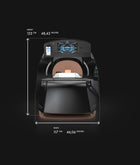
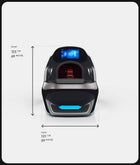
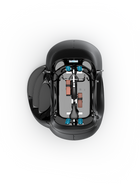
If you’re weighing it up, our Helix Body Sculpt is built around genuine clinic-grade output and a proper treatment protocol, and it sits within our wider Helix Active range of active-recovery and body technology. And if you’d like to talk through whether it’s the right fit for your space, your clients or your own goals — and hear an honest answer — you can book a call and we’ll tell you straight.
The honest sign-off
EMS body sculpting is neither the miracle its loudest fans claim nor the pure hokum its cynics assume. It is a legitimate aesthetic body-contouring technology with more real imaging evidence behind it than most of its rivals — and a stack of small, often industry-funded studies that call for a pinch of salt alongside the MRI scans. Used well, on the right person, as the finishing touch to a life that already involves moving about and eating sensibly, it can give you a firmer, more defined result in a stubborn spot. It will not make you fit, it will not make you thin, and it absolutely will not do 20,000 real crunches on your behalf. But as a way of nudging a bit more definition out of a body you’re already looking after, it’s one of the few gadgets in this corner of the market that can show you what it did on a scan. Just declare your implants, pick a serious machine, and keep your expectations the right size.
Sources
- Kinney BM, Lozanova P. High intensity focused electromagnetic therapy evaluated by magnetic resonance imaging: Safety and efficacy study of a dual tissue effect based non-invasive abdominal body shaping. Lasers in Surgery and Medicine, 2019. link
- Katz B, Bard R, Goldfarb R, Shiloh A, Kenolova D. Ultrasound Assessment of Subcutaneous Abdominal Fat Thickness After Treatments With a High-Intensity Focused Electromagnetic Field Device: A Multicenter Study. Dermatologic Surgery, 2019. link
- Kinney BM, Kent DE. MRI and CT Assessment of Abdominal Tissue Composition in Patients After High-Intensity Focused Electromagnetic Therapy Treatments: One-Year Follow-Up. Aesthetic Surgery Journal, 2020. link
- Jacob CI, Kinney BM, Busso M, Chilukuri S, et al. High Intensity Focused Electro-Magnetic Technology (HIFEM) for Non-Invasive Buttock Lifting and Toning of Gluteal Muscles: A Multi-Center Efficacy and Safety Study. Journal of Drugs in Dermatology, 2018. link
- Samuels JB, Katz B, Weiss RA. Radiofrequency Heating and High-Intensity Focused Electromagnetic Treatment Delivered Simultaneously: The First Sham-Controlled Randomized Trial. Plastic and Reconstructive Surgery, 2022. link
- Giesse S. A German Prospective Study of the Safety and Efficacy of a Non-Invasive, High-intensity, Electromagnetic Abdomen and Buttock Contouring Device. Journal of Clinical and Aesthetic Dermatology, 2021. link
- Sachdev M, et al. A Systematic Review of Electromagnetic Treatments for Body Contouring. Journal of Clinical and Aesthetic Dermatology, 2023. link