Hydromassage: A Clear, Honest Guide (UK)
Imagine a warm, water-powered massage you take lying down, fully clothed, with no therapist and no undressing. That is hydromassage. An honest, warmly told guide to what it is (including dry hydromassage beds), why it feels so good, the benefits the evidence actually supports, who it suits, and how to choose one for a spa, gym, clinic or home.
There is a specific kind of sigh a person lets out about ninety seconds into a hydromassage. You will have heard its cousin at the end of a long bath, or in the first moment of sitting down after a day on your feet. It is the sound of a nervous system quietly deciding that, for the next little while, nothing more will be required of it. The remarkable thing is that the person making this sound is lying fully clothed on what looks like a very comfortable bed, has removed not a single garment, and will walk out in a quarter of an hour entirely dry, slightly dazed, and rather reluctant to return to their own life.
This is the quiet genius of hydromassage. Most of the great relaxation rituals ask something of you first — the undressing, the awkward towel, the oil, the stranger's hands, the committing of an entire afternoon. Hydromassage asks for almost nothing. You lie down, warm water does the work, and you get up again. It is, without wishing to oversell it before we have even started, one of the most inviting things you can offer a tired human being.
So what actually is hydromassage?
At its simplest, hydromassage is massage delivered by water rather than hands. Jets of warm water are aimed at the body under pressure, and as they sweep and knead their way along your muscles they produce something uncannily close to the kneading of a masseur — minus the masseur. There are wet versions, where you sit or recline in water and the jets reach you directly. But the kind that has quietly taken over spa menus, gym recovery corners and clinic waiting areas is the dry hydromassage bed, and it is a genuinely clever bit of engineering.
On a dry hydromassage bed you lie on top of a cushioned, waterproof membrane. Beneath that membrane, heated water is pumped through jets that travel the length of your body, pressing up through the barrier to massage your back, legs and shoulders. The water never touches you. You stay dressed, you stay dry, your hair survives intact, and yet you feel the warmth and the rolling pressure as if you were floating in it. No changing room, no wet floors, no recovery time — you can have it in a lunch break and go straight back to your desk. For somewhere like a gym or a clinic, that "clothed and dry in fifteen minutes" quality is precisely what turns a nice idea into something people actually book, again and again.
Why it feels so good
Two things are happening at once on that bed, and pleasingly, both have a decent evidence base behind them.
The first is warmth. Warm water is one of the oldest and most reliable ways humans have found to feel better, and the research backs up what every long bath has already told you. In a randomised trial, people who had a daily warm-water immersion reported significantly less fatigue, stress and pain, and better mood, than when they simply showered — with lower scores for tension, anger and low spirits on a standard mood questionnaire (Goto et al., Evidence-Based Complementary and Alternative Medicine, 2018). Heat, it turns out, is not merely pleasant. It measurably settles people.
The second is the massage itself. Here the evidence is genuinely encouraging. A large meta-analysis of massage research found that a single session reliably reduces state anxiety, blood pressure and heart rate, and that a full course of massage produced reductions in deeper, longer-run anxiety and low mood comparable in size to a course of psychotherapy (Moyer et al., Psychological Bulletin, 2004). That is a striking finding for something as undramatic as being gently kneaded. And for the body as well as the mind, a meta-analysis of post-exercise recovery methods ranked massage as the single most effective technique for easing delayed-onset muscle soreness and perceived fatigue — the deep, two-days-later ache that follows a hard session (Dupuy et al., Frontiers in Physiology, 2018).
A hydromassage bed is, in effect, a way of stacking those two pleasant and reasonably well-evidenced things — warmth and massage-like pressure — into a single fifteen-minute parcel, with none of the undressing.
The genuine benefits, and who it suits
Put plainly, here is what hydromassage is good at. It is a superb way to relax and unwind, to take the edge off stress and tension, and to leave people feeling calmer and looser than when they arrived. Clients consistently report a sense of eased, relaxed muscles and relief from everyday aches and stiffness, and the warmth-plus-massage combination lines up well with the evidence for reduced stress and anxiety and for modest help with post-exercise muscle soreness. These are the hydromassage benefits worth leaning on — real, repeatable and the reason people come back.
It suits almost everyone, which is part of its charm. Time-poor professionals love that it fits a lunch hour. Gym members use it to wind down after training. Spa and salon guests adore it as a warm, effortless treat — often the thing they rebook first. Clinics offer it as a gentle, relaxing amenity that asks nothing of the patient. Because a single bed can turn a dozen or more clients around in a day, each dressed and dry and out the door in minutes, it is one of the easiest premium add-ons to run: no therapist on the payroll, no laundry, no downtime between guests.
The honest bit (and a word on safety)
Now the one caveat, briefly and warmly. Hydromassage is a relaxation and recovery experience — a lovely one — and it is best sold as exactly that. It is not a weight-loss machine, and it will not "detox" anything; your liver and kidneys have that covered, and no amount of warm water changes it. The honest, evidence-backed promise is calmer, looser, less-stressed people who feel wonderful afterwards, and that is a thoroughly good thing to promise without reaching for claims the science doesn't support.
And the usual sensible note: if you are pregnant, or have a heart condition, very high or low blood pressure, deep vein thrombosis, open wounds or any medical condition you're unsure about, have a quick word with your doctor before a session. This guide is about wellbeing and relaxation; it is not medical advice, and hydromassage is not a treatment for any disease.
How to choose a hydromassage bed
If you're thinking of adding one, a few things separate a bed people queue for from one that gathers towels.
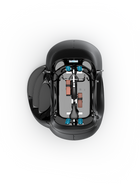
Dry versus wet. For almost every commercial setting, a dry hydromassage bed wins comfortably: no changing, no wet floors, no hygiene headache, and a client turnaround measured in minutes. The Activ Aqua Bed is a dry hydromassage bed built for exactly this — warm water jets beneath a sealed membrane, so guests stay fully clothed and dry.
Heat, jet control and the experience. The things clients actually feel are the temperature of the water, how the jets travel, and whether they can dial the pressure and zones to taste. A good bed makes the whole fifteen minutes feel tailored rather than generic — that is what earns the rebooking.
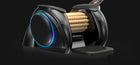
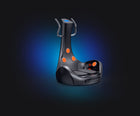
Match the machine to the room. If you want the relaxation experience in a different form factor, the HydroShape and the HydroBike II offer water-based options worth comparing alongside the bed, depending on your space and what your clients come to you for.
If you'd like to go deeper into how it works before deciding, our Science Lab on hydromassage lays it out, and if you want to talk through what fits your space, your clientele and your budget, you can book a call and we'll give you an honest view.
The warm sign-off
Hydromassage will not change your life, and it is refreshing not to pretend otherwise. What it will do is take a tired, stressed, slightly achy person and, in fifteen clothed-and-dry minutes, hand them back a calmer, looser, quietly delighted version of themselves — backed by reasonable evidence that warmth and massage genuinely settle the body and mind. For anyone running a spa, gym or clinic, that is a rare thing: a treat your clients adore, that costs you almost nothing to deliver once it's in, and that they will happily come back for. And for the person on the bed, it is simply fifteen minutes in which nothing is required of them at all. Which, these days, might be the most luxurious offer of the lot.
Sources
- Moyer CA, Rounds J, Hannum JW. A meta-analysis of massage therapy research. Psychological Bulletin, 2004. link
- Dupuy O, Douzi W, Theurot D, Bosquet L, Dugué B. An Evidence-Based Approach for Choosing Post-exercise Recovery Techniques to Reduce Markers of Muscle Damage, Soreness, Fatigue, and Inflammation: A Systematic Review With Meta-Analysis. Frontiers in Physiology, 2018. link
- Goto Y, Hayasaka S, Kurihara S, Nakamura Y. Physical and Mental Effects of Bathing: A Randomized Intervention Study. Evidence-Based Complementary and Alternative Medicine, 2018. link