PEMF Therapy: What It Is, What the Science Says & How to Choose a Bed
A warm, honest guide to PEMF (pulsed electromagnetic field) therapy: what it actually is, what it feels like to lie on a PEMF bed, where the evidence is genuinely solid and where it's still emerging, who it suits, and how to choose one for home, clinic or spa.
There is a particular kind of tiredness that a good night's sleep doesn't quite touch. The sort that settles into your shoulders after a hard training block, a long week, or simply the business of being a human with too many tabs open. And there is a particular kind of pleasure in the remedy people keep rediscovering: lying down, doing absolutely nothing of consequence, and letting a machine quietly get on with the restoring. PEMF therapy is one of the more intriguing versions of that remedy — and, pleasingly, one with rather more genuine science behind it than most of the wellness aisle.
PEMF stands for pulsed electromagnetic field, which sounds like something that should come with a hard hat and a clipboard. In practice it is far gentler than its name. You lie on a mat or a bed, a series of coils beneath you produces low-frequency magnetic pulses, and you feel — well, mostly, you feel calm. Some people notice a faint tingling; most notice nothing at all beyond a creeping, pleasant heaviness, the kind that arrives about ten minutes into a massage when your body finally concedes that it is, in fact, safe to switch off.
What PEMF actually is, and how it's thought to work
Here is the honest version. A PEMF device sends pulsed magnetic fields through the body. Because the pulses are non-invasive and simply pass through tissue, the coils are described as being inductively coupled to whatever is beneath them — no heat, no needles, no sensation of being plugged into the mains (Waldorff, Zhang & Ryaby, Journal of Orthopaedic Translation, 2017). The leading idea is that these pulses nudge the electrical environment around and within cells, and that a range of the pulse's components can interact with various biochemical signalling pathways inside the tissue. In plainer English: the field is thought to give cells a gentle prompt, and researchers are still mapping exactly which prompts matter and for what.
That honest uncertainty is worth keeping in your pocket, because it tells you something useful: PEMF is not magic and it is not nonsense. It is a real, measurable physical effect whose finer biology we are still filling in — which, as these things go, is a far more respectable place to start than most.
Where the evidence is genuinely solid — and where it's still emerging
The strongest card PEMF holds is also its oldest. Long before it drifted into wellness studios, PEMF earned its stripes in bone healing. Devices that deliver these fields have been cleared by the US Food & Drug Administration as bone-growth stimulators — used, under medical supervision, for fractures that have stubbornly refused to knit (what surgeons call non-unions) and as an adjunct in certain spinal fusions (Waldorff, Zhang & Ryaby, Journal of Orthopaedic Translation, 2017). That is a genuine, regulated, decades-old clinical use. It is also, to be clear, a specific medical application of prescription devices — not a description of what a wellness bed will do to you — but it is the solid ground beneath the whole field.
The next most encouraging area is joint pain, particularly the knee. A 2022 systematic review and meta-analysis pooling eleven randomised trials in osteoarthritis found that PEMF improved pain, stiffness and physical function compared with other conservative approaches (Tong et al., Pain Research & Management, 2022). An earlier meta-analysis of sham-controlled trials likewise reported a benefit for osteoarthritis pain, while rightly noting that the trial protocols varied a good deal (Wu et al., BMJ Open, 2018). It's a promising, reasonably consistent signal — though the researchers themselves are careful about the variation between studies, and so should we be.
And then there is everything else: the broader claims around general recovery, relaxation, sleep and all-round wellbeing. This is where honesty earns its keep. These uses are far more preliminary — plausible, often lovely in the experiencing, but not yet backed by the weight of evidence that bone healing and joint pain enjoy. The grown-up position is simply to enjoy PEMF for the deeply pleasant, restorative lie-down it reliably is, hold the bigger claims lightly, and let the science catch up at its own pace. That seems a perfectly happy bargain to us.
The experience, and who it's for
Set the studies aside for a moment, because this is really the heart of it. The experience of a PEMF session is, more than anything, restful. You lie down. The lights go low. For twenty minutes or so there is nothing you can usefully do except exist, which is a rarer luxury than it ought to be. People climb off feeling loosened, unhurried and quietly restored — the way you feel after a long bath or a very good nap, except you didn't have to drain anything afterwards.
That makes it a lovely fit for a few sorts of people. Athletes and heavy trainers like it as a passive, no-effort part of a recovery routine — something to do on a rest day that asks nothing of already-tired muscles. The simply-frazzled like it as a sanctioned pause, a standing appointment with stillness. And for clinics, spas, gyms and recovery studios, a PEMF bed is a genuinely premium amenity: an unintimidating, broadly suitable, blissfully low-staff treatment that fills the gap between the hands-on therapies and the more theatrical cold-and-heat protocols. Nobody has ever been frightened of lying down.
A friendly word on safety. PEMF is very well tolerated, but it isn't for absolutely everyone. The clear contraindications are a pacemaker or any implanted electronic device — the magnetic field can interfere with them — and pregnancy, where it simply hasn't been established as safe. Anyone in those groups should steer clear, and a sensible operator screens for them before a first session. If you have a medical condition of any kind, have a word with your doctor first. This guide is about wellbeing and recovery; it isn't medical advice, and PEMF is not a treatment for any disease.
So how do you choose a PEMF bed?
Once you've decided you'd like regular access to that restorative lie-down, the question becomes what to lie on. A thin portable mat will technically produce a field, but it's a world away from a proper bed built for daily use and genuine comfort. A few things separate a treat from a token gesture.
Comfort and build. You are going to spend twenty-odd minutes on this thing, ideally many times. The surface, the support and the sense of being cradled rather than perched matter enormously — a bed you look forward to is a bed you'll actually use.
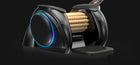
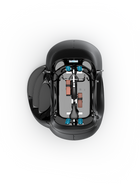
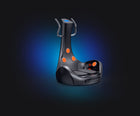
What else it brings to the party. The nicest recovery beds don't stop at PEMF; they layer in complementary comforts so one lie-down does the work of several. Our Helix PEMF Bed — 5-in-1 Therapy Bed is built around exactly that idea: PEMF sits alongside far-infrared warmth, red and near-infrared light, vibroacoustic therapy you feel as a low, soothing hum, and heated gemstones that hold a deep, even warmth. It is, frankly, a gorgeous stack of comforts — the sort of twenty minutes you start rearranging your day around.
Setting and use. Be honest about where it's going. A single bed for a home recovery corner is a different proposition from a unit cycling clients through a busy clinic floor all day — the latter needs the durability and the easy-clean surfaces to match.
If you'd like to go deeper into the research before deciding, our Science Lab on PEMF therapy lays it out plainly, and if you'd rather talk through what actually fits your space and your use — home, clinic or spa — you can book a call and we'll be honest about it.
The honest sign-off
PEMF is one of the gentler, more inviting corners of the recovery world: a genuinely pleasant lie-down, resting on a bedrock of real clinical history in bone healing and some encouraging evidence in joint pain, with a wider world of wellbeing claims that are promising but still finding their feet. You won't be cured of anything. You will, very reliably, get twenty peaceful minutes and climb off feeling rather better than you climbed on — and if you've chosen well, you'll have looked forward to every one of them. That, for a machine that asks you only to lie still, is a lovely thing to be able to say.
Sources
- Waldorff EI, Zhang N, Ryaby JT. Pulsed electromagnetic field applications: A corporate perspective. Journal of Orthopaedic Translation, 2017. link
- Tong J, Chen Z, Sun G, et al. The Efficacy of Pulsed Electromagnetic Fields on Pain, Stiffness, and Physical Function in Osteoarthritis: A Systematic Review and Meta-Analysis. Pain Research & Management, 2022. link
- Wu Z, Ding X, Lei G, et al. Efficacy and safety of the pulsed electromagnetic field in osteoarthritis: a meta-analysis. BMJ Open, 2018. link