The Technology Arms Race in Elite Sport
Marginal gains moved from the track to the recovery room. Inside elite sport's quiet arms race, and why it always ends up on the high street.
In elite sport, everyone already trains hard, recruits well and eats right. Those advantages have equalised, which is exactly why they no longer decide anything. The edge clubs now spend millions chasing is recovery: the technology that keeps athletes healthy, available and able to repeat their best more often. It is a quiet arms race, and its results reach your local gym a few years later.
The end of the train-harder era
At the top level the fundamentals are commoditised. Every serious team has strength and conditioning coaches, GPS and load tracking, nutritionists and analysts. When everyone is already doing the obvious things to a high standard, training harder returns less and less, and it carries a rising risk of breaking the very athlete you are trying to improve. The differentiator has moved out of the session and into the twenty-two hours around it.
That is where recovery lives. How fast an athlete clears fatigue, how well they sleep, how quickly inflammation settles and how consistently they can train without picking up a soft-tissue injury are now the variables with the most headroom left in them. Recovery is the last big, unevenly distributed advantage, which is precisely why the money has turned toward it.
Availability is the metric that wins seasons
Coaches have a saying: the best ability is availability. A squad that stays fit, trains fully and avoids the steady drip of hamstring and calf injuries compounds an advantage week after week, while a more talented squad that keeps breaking down never gets to show it. Across a long season, availability decides more league positions than raw quality does.
This reframes the whole spend. Elite teams do not buy an ice bath or a hyperbaric chamber because it feels good. They buy it because it protects availability, and availability is measurable in appearances, minutes played and injury days lost. Once you can put a number on it, the business case writes itself, and the arms race accelerates.
The best ability is availability, and recovery technology is how elite sport buys it.
What the money actually buys
No single machine wins a title. What elite programmes assemble is a stack, where each modality does a specific job and the compounding effect is the point.
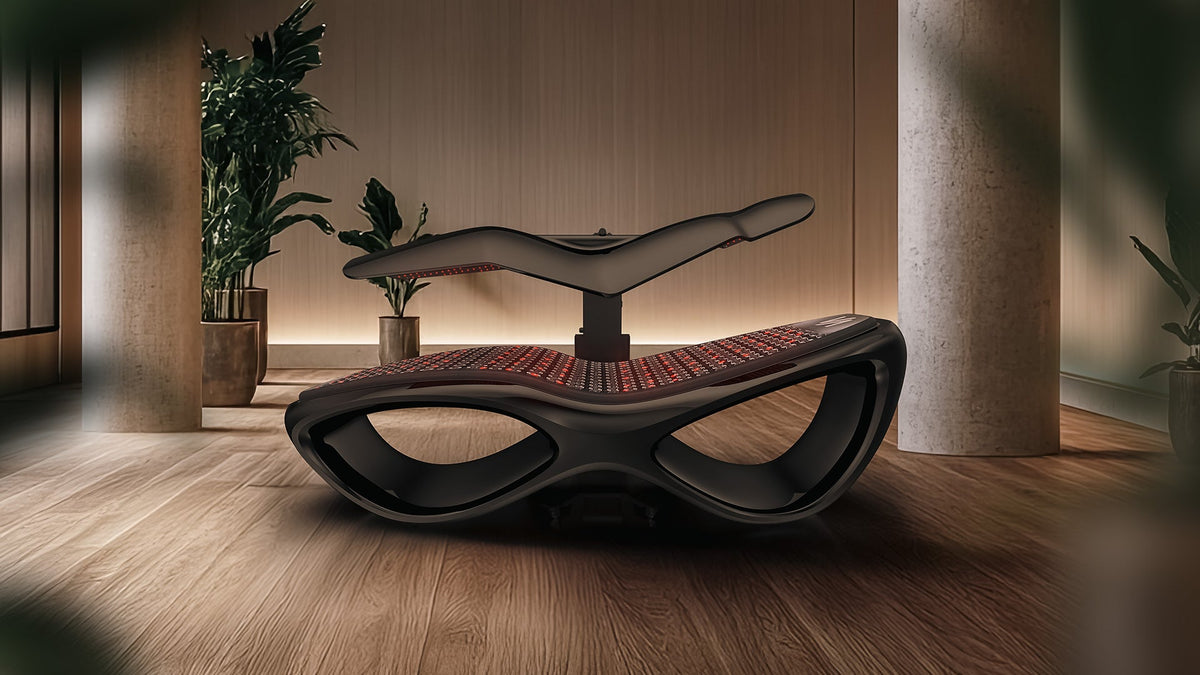
Cold, through ice baths and cryotherapy, manages inflammation and blunts soreness, especially through congested fixture periods where the next game matters more than long-term adaptation. Heat, through sauna, adds cardiovascular conditioning and heat adaptation alongside its recovery benefit. Oxygen, through hyperbaric chambers, accelerates soft-tissue and bone healing and speeds return to play. Light, through red and near-infrared therapy, supports cellular recovery and sleep. PEMF and compression keep circulation and readiness up between sessions. And underneath all of it sit sleep and breathing, the least glamorous and most powerful levers of the lot.

Inside an elite recovery room
A modern elite recovery space usually pairs a cold plunge with a sauna for contrast work, adds a hyperbaric chamber for injured players, lines up red light and PEMF or compression stations for daily readiness, and wraps the whole thing in a sleep and breathing protocol. Nothing is used at random. Each modality is scheduled around training load, and the athlete’s wearable data decides the dose.
The data layer changed everything
Recovery used to be guesswork. Now it is measured. Wearables track sleep and heart rate variability, GPS vests track running load, and blood markers track fatigue and readiness. That measurement is what turned recovery from a nice-to-have into a fundable line item, because a performance director can now show exactly what a modality does to the numbers that predict injury and form.
It also explains why the arms race keeps speeding up. When you can prove that better recovery buys more available minutes from your most expensive assets, spending on it stops being a cost and becomes an investment with a return.

Why it always filters down
Here is the pattern worth internalising: every recovery tool that is now normal in a high-street gym started at the elite end. Ice baths, foam rollers, compression boots, red light panels and infrared saunas all followed the same route. They were proven and refined in professional sport, the price came down, the format simplified, and the modality became a mainstream amenity.
The lag used to be a decade. It is now closer to a few years, because consumer demand pulls the technology forward faster than ever. The wearable on your wrist and the podcast in your ears mean the public often wants the tool before it has fully finished trickling down.
Your roadmap is their kit list
For a gym, clinic, hotel or studio, the elite arms race is the most reliable product roadmap you will ever get. The modalities professional teams are investing in now are the ones your members will ask for next. Cold and heat contrast has already gone mainstream. Red light and hyperbaric are the current wave. PEMF, structured sleep and functional breathing are the emerging edge.
You do not need a sports-science budget to benefit. You need to read the direction of travel and bring the proven, de-risked versions of these tools to a market that is increasingly ready, and increasingly willing, to pay for them.
The bottom line
Elite sport is effectively running the world’s most expensive research programme into human recovery, and unusually, the results are public. You can watch which modalities the best teams adopt, keep and expand, and treat that as a validated shortlist. The smart commercial move is not to invent the future of recovery. It is to follow the evidence trail elite sport is already blazing, one proven modality at a time.