Vacuum (Negative-Pressure) Training: A Clear, Honest Guide (And How to Choose)
Walking on a treadmill while sealed from the waist down in what looks like a space-pod — vacuum, or negative-pressure, training is marketed hard for fat loss and cellulite. An honest, warmly told tour of what it actually does, where the slimming claims outrun the evidence, and how to choose a machine for a studio, clinic or gym.
There is a lovely moment, once the novelty of climbing into a vacuum trainer wears off, when you realise you are simply going for a walk. You stand on a treadmill, as people have done in gyms for decades, except from the waist down you are sealed inside a large, softly humming pod — a sort of snug, inflatable half-capsule clasped around your hips — while a pump gently lowers the air pressure around your legs and warms them with infrared heat. From the waist up it is an ordinary morning stroll. From the waist down it is the most pleasant forty minutes of exercise you will have all week. That, more than anything, is the point of the thing, and it is a rather good one.
Ignore the miracle-slimming promises you will see floating around online — the real appeal is simpler, and honestly a good deal better. So let us talk about what this category genuinely is, who it suits beautifully, and how to choose one that will earn its place for years.
What negative-pressure training actually is
Strip away the space-pod styling and the idea is simple and rather elegant. You exercise — walk, cycle or climb — with the lower half of your body enclosed in a chamber held at a pressure a little below the surrounding air. That reduced pressure is the "vacuum" (a gentle partial one, not the fillings-rattling kind). Most machines pair it with infrared warmth, so your legs are both under negative pressure and pleasantly heated as you move. Some add red light, and a few include an "oxygen trainer" that feeds you enriched air. The whole experience is quiet, warm and curiously soothing — closer to a spa treatment than a session on the gym floor, even though your heart rate is up and you are genuinely working.
Why it is genuinely worth having
It is real exercise, and that is the heart of it. When you are in the pod you are doing low-impact cardiovascular exercise — walking or cycling, heart rate up, muscles working — and the benefits of that are about as settled as evidence in this field ever gets. The World Health Organization's physical-activity guidelines rest on exactly this point: regular moderate activity improves health across almost every system you care about, and some is far better than none (Bull et al., British Journal of Sports Medicine, 2020). A machine that makes that activity feel like a treat has already done something valuable before you count anything else.
It is kind to the body. Because it is low-impact, it spares the knees, hips and back the pounding of an ordinary treadmill. That makes it a wonderfully welcoming way to move for people who find normal cardio hard going or simply off-putting — deconditioned beginners taking their first steps back, older users, anyone returning gently from an injury, and those for whom a conventional gym feels intimidating. You get the movement without the jolt, which is exactly what a great many people need.
It is comfortable, warm and genuinely enjoyable. The infrared heat makes a session feel like a small indulgence rather than a chore, and the enclosed, humming calm of the pod is oddly relaxing. This matters more than it sounds, because the best exercise in the world is the one a person actually keeps doing. Enjoyment drives adherence, and adherence is the quiet hero behind every good fitness outcome there is.
For an operator, that enjoyment is the business case. For a studio, gym, spa or clinic, a machine people look forward to is a machine people come back for. It is a differentiated, premium amenity — the sort of thing members mention to friends and book repeat sessions around. In a market where retention is everything, an experience clients genuinely like is worth a great deal.
The warmth, the light and the extras
Part of the charm of these machines is that they fold several pleasant things into one box, and each adds to the experience in its own way.
Infrared heat. The warmth is the star of the show for most people — it makes the session feel good, loosens you up, and turns a brisk walk into something you look forward to. It is comfort, pure and simple, and comfort is exactly what keeps people coming back.
Red light and "oxygen" add-ons. Some units include red-light panels or an oxygen trainer. Both are pleasant, perfectly safe parts of the experience — enjoy them as part of the overall feel of a session rather than the reason you choose a machine.
The fairest and happiest way to think about the whole package is as a warm, comfortable, low-impact workout that people genuinely want to repeat. Framed that way it is honest, and it happens to be rather lovely.
Who it suits — and a quick word on safety
Seen clearly, negative-pressure training has a genuine and generous niche. It is low-impact, which makes it kind to knees, hips and backs that do not love a normal treadmill — ideal for deconditioned beginners, older users, people easing back after injury, the time-poor who want an efficient session, and anyone who finds ordinary cardio a slog. It is warm, comfortable and faintly novel, which is precisely what helps people turn up and keep moving. For a studio, clinic or spa, it is a differentiated, welcoming experience to put on the menu — one clients remember and return for.
A quick word on safety. As with any exercise, start gently and listen to your body. If you have a heart or circulatory condition, high or low blood pressure, are pregnant, or have any medical condition you are unsure about, have a quick chat with your doctor before you begin. Keep hydrated, and stop if you feel faint or unwell. This article is general wellbeing information, not medical advice.
So how do you choose one?
Once you know the experience you want to offer, the choice comes down to the movement that suits your users and the setting you are in.
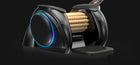
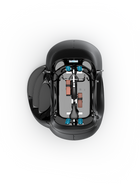
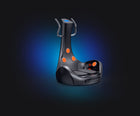
Treadmill, bike or stair climber? The walking machines are the classic of the category — natural, weight-bearing, and the format most people picture. Our Bodyshape V2 and the original Bodyshape are vacuum treadmills: you walk, the chamber does its thing, and infrared warms the legs. If you would rather take the load off entirely — for heavier users, sensitive knees, or a genuinely gentle session — a recumbent bike is the kinder option, and the Infrashape Horizontal V2 and Infrashape Horizontal let you cycle seated while still under negative pressure and infrared warmth. And if you want a bit more intensity with a leg-and-glute emphasis, the Infrastep infrared stair climber is the one to look at.
Home or commercial? For a studio, clinic or gym, the questions that matter are the practical ones: build quality and the pump that is the heart of the whole machine, easy hygiene and wipe-down between clients, throughput across a busy day, and warranty. A machine that runs reliably from open to close and is simple to clean will serve you far better than one with the longest feature list.
If you would like to go deeper into the mechanism and the history before deciding, our Science Lab on vacuum and under-pressure training lays it all out. And if you would like to talk through what genuinely fits your space, your users and your budget, you can book a call and we will give you a straight, friendly answer.
The happy sign-off
Vacuum training is, at its best, a comfortable, warm, low-impact way to exercise that people actually enjoy — and enjoyment is what turns good intentions into a habit. It opens the door to movement for people who find ordinary cardio hard, it is gentle on the joints, and it feels like a treat rather than a task. Walk, cycle or climb in the pod, soak up the warmth, and let the pleasant experience do what it does best: bring you back tomorrow. And if your doctor says wait, wait.
Sources
- Bull FC, Al-Ansari SS, Biddle S, et al. World Health Organization 2020 guidelines on physical activity and sedentary behaviour. British Journal of Sports Medicine, 2020;54(24):1451–1462. link
- Oja P, Titze S, Kokko S, et al. Health benefits of different sport disciplines for adults: systematic review. British Journal of Sports Medicine, 2015;49(7):434–440. link
- Qorri E, et al. Open-Label Study to Evaluate the Efficacy and Safety of Electromagnetic Field and Negative Pressure. Life, 2025;15(7):1148. link