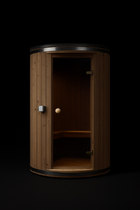
Saunas: What the Science Actually Says (And How to Choose One)
Saunas are having a moment, so it is worth asking what the heat actually does to you. An honest, warmly told tour of the real evidence — the striking Finnish cohort findings and why they are associations rather than proof — plus how hot, how long, how often, and how to choose a traditional, infrared or steam sauna for home or a commercial recovery floor.
There is a specific kind of contentment that arrives about eight minutes into a sauna. The first minute or two is faintly alarming — you sit there wondering whether you have made a mistake, whether human beings are really meant to marinate at the temperature of a mild oven. Then the shoulders drop, the mind goes quiet, the ladle of water hisses on the stones, and you reach a state the Finns have had a word for all along. They have around three million saunas for five and a half million people, which tells you everything about how seriously a nation can take the business of sitting still in the heat.
Saunas are now firmly in fashion, which — as with anything the internet decides is miraculous — is precisely the moment to get suspicious. So let us do the unfashionable thing and look at what the evidence actually says: the genuinely striking, the honestly promising, and the bits that have been stretched well past what the research can bear. Then, and only then, we will get to the matter of choosing one.
What the heat actually does to you
A sauna does something rather clever: it convinces your body it is exercising while you do absolutely nothing. As your core temperature climbs, your heart rate rises and your blood vessels open up to shunt warmth to the skin. In the major review of the field, heart rate during a session can reach 120 to 150 beats per minute — a load the authors compare to low-to-moderate physical exercise (Laukkanen, Laukkanen & Kunutsor, Mayo Clinic Proceedings, 2018). The crucial difference, which the same authors are careful to flag, is that no muscles are actually working. You get a cardiovascular stir without the training effect of a run. It is not a substitute for exercise. It is more like exercise's agreeable, lazy cousin.
Underneath that, the heat trips a genuine stress response. A randomised study that sat volunteers in a heat chamber for thirty minutes found extracellular heat shock protein 72 — a molecular repair-and-protect protein that cells churn out under stress — rose by around 49% on average, alongside the exercise-like jump in heart rate (Iguchi et al., Journal of Athletic Training, 2012). Worth a caveat straight away: that was a heat chamber rather than a traditional sauna, and a rise in a marker in the blood is not the same thing as a proven health outcome. But it is a real, measurable sign that gentle heat stress asks the body to adapt, which is the thread running through most of the hopeful theories about why saunas might be good for us.
What the evidence supports — and what's been oversold
The headline findings come from Finland, and they are genuinely eye-catching. The most-cited work follows a group of middle-aged Finnish men — the Kuopio cohort — for around two decades. Compared with men who used a sauna once a week, those who went four to seven times a week had markedly lower rates of fatal cardiovascular events, sudden cardiac death and death from all causes over the follow-up (Laukkanen, Khan, Zaccardi & Laukkanen, JAMA Internal Medicine, 2015). A later analysis of the same cohort found frequent sauna use was likewise associated with a lower risk of developing high blood pressure (Zaccardi, Laukkanen et al., American Journal of Hypertension, 2017).
Those are big numbers, and they deserve a big asterisk. This is observational research — it watches what already happens in people's lives rather than assigning saunas at random. It can show a strong association; it cannot, on its own, prove the sauna is what caused the lower risk. The men who bathed four to seven times a week may simply have been healthier, wealthier, less stressed or more able to lounge about in a sauna half the week to begin with, and researchers can only adjust for the confounders they thought to measure. The authors themselves say as much and call for further work on the mechanism. The cohort was also middle-aged men in one region of Finland, so we should be cautious about assuming it reads across to everyone. This is a promising signal worth taking seriously — not a prescription, and certainly not proof that a sauna prevents heart disease.
Relaxation and the general feel-better effect: on firmer, humbler ground. Reviews of the wider literature find regular sauna use is associated with modest improvements in things like blood pressure and markers of vascular function, though many of the underlying studies are small and short (Hussain & Cohen, Evidence-Based Complementary and Alternative Medicine, 2018; Laukkanen et al., 2018). The systematic review by Hussain and Cohen pulled together forty studies on nearly 3,900 people and concluded, sensibly, that regular sauna bathing may offer benefits — while noting that only thirteen were randomised trials and most were tiny. In plain terms: saunas reliably make most people feel calmer and looser, which is a perfectly respectable thing for a hot wooden box to do, and the deeper physiological claims sit somewhere between promising and not-yet-proven.
Traditional versus infrared: not an even contest, evidence-wise. Nearly all the striking research above was done on traditional Finnish saunas — high heat, dry air, hot stones. Infrared saunas, which run far cooler and warm you with radiant panels rather than hot air, have a much thinner file. A review of the far-infrared evidence found only a modest set of small studies, concluding there was limited, moderate evidence for some cardiovascular benefit and that manufacturers' claims generally outrun what the research supports (Beever, Canadian Family Physician, 2009). Infrared may well turn out to do useful things, and plenty of people simply find the gentler heat more bearable. But if you are choosing partly on the strength of the science, it is only honest to say the traditional sauna has far more evidence behind it.
How hot, how long, how often
A traditional sauna typically runs at roughly 70 to 100°C, with the Kuopio bathers sitting around 80°C or so. Infrared cabins run much cooler — usually 45 to 60°C — because the warmth reaches you directly rather than through the air. There is no prize for suffering: hotter is not automatically better, just harder to sit through.
For time, most people land on somewhere between 10 and 20 minutes per session, and in the Finnish data it was the regulars — four or more sessions a week — who showed the strongest associations. If you are new to it, start cooler and shorter than you think you need to, sit on a lower bench where it is less fierce, and build up. Drink water. The entire point is to feel better afterwards, not to set a personal best.
A serious word on safety. Heat is a real cardiovascular stressor, and it dehydrates you. Never use a sauna after drinking alcohol; come out if you feel dizzy, faint or unwell; and give it a miss if you are unwell or pregnant unless your doctor has said otherwise. If you have a heart condition, low or high blood pressure, or any medical condition at all, talk to your doctor before you start. This article is about wellbeing and recovery; it is not medical advice, and a sauna is not a treatment for any disease.
So how do you actually choose a sauna?
Once you have decided the heat is for you, the choice comes down to a few unglamorous, decisive things.
Traditional, infrared or steam. A traditional sauna gives you the authentic thing — high, dry heat, the hiss of water on stones, and the body of evidence to match. An infrared cabin trades some of that for a gentler, cooler experience that some people find easier to tolerate. A steam room is different again: lower temperature but near-total humidity, which feels intense in its own way and is lovely for the airways and the skin. Our Science Lab page on traditional saunas lays out the heat evidence in more depth if you want to decide on the merits.
Heater sizing and timber. The heater has to be matched to the cabin's volume — undersize it and you will sit there waiting forever for a heat that never quite arrives. Timber matters too, both for how the sauna holds heat and for how long it lasts; we build in Thermowood, which is kiln-treated to cope with years of heat-and-cool cycling without warping. Good insulation is the quiet difference between a sauna that is ready in forty minutes and one that drinks electricity all evening.
Home or commercial, and where it's going. A compact cabin for a spare corner is a very different proposition from a unit built to take a steady stream of members through a recovery floor all day. For a home or garden, our Solstice traditional sauna range and the Eldur barrel sauna cover the usual ground — indoor cabins and the characterful outdoor barrel. If you want humidity rather than dry heat, the Helix indoor steam room does that job. And if nothing off-the-shelf quite fits the space, our custom saunas are built to your room — you can rough out a design yourself in our 3D sauna builder.
Installation. Be realistic about the dull practicalities: the floor has to be right, the heater usually needs a dedicated electrical supply (larger units often want three-phase), and an outdoor sauna needs a solid, level base. It is far cheaper to sort this out on paper than after delivery. If you would like to talk it through before committing to anything, you can book a call and we will give you a straight answer about what actually fits.
The honest sign-off
A sauna will not cure anything, and anyone who tells you otherwise is selling harder than the evidence allows. What it will do, on the strength of what we actually know, is reliably relax you, give your cardiovascular system a gentle stir, and — if the Finnish cohort studies are pointing where they seem to point — perhaps go along with a longer, healthier life, in a way the research is still working hard to understand. That is a genuinely interesting place for the science to be, and a genuinely pleasant way to spend twenty minutes. Sit a little lower than you think, drink your water, and if your doctor says wait, wait.
Sources
- Laukkanen T, Khan H, Zaccardi F, Laukkanen JA. Association Between Sauna Bathing and Fatal Cardiovascular and All-Cause Mortality Events. JAMA Internal Medicine, 2015. link
- Laukkanen JA, Laukkanen T, Kunutsor SK. Cardiovascular and Other Health Benefits of Sauna Bathing: A Review of the Evidence. Mayo Clinic Proceedings, 2018. link
- Zaccardi F, Laukkanen T, et al. Sauna Bathing and Incident Hypertension: A Prospective Cohort Study. American Journal of Hypertension, 2017. link
- Hussain J, Cohen M. Clinical Effects of Regular Dry Sauna Bathing: A Systematic Review. Evidence-Based Complementary and Alternative Medicine, 2018. link
- Iguchi M, Littmann AE, Chang S-H, et al. Heat Stress and Cardiovascular, Hormonal, and Heat Shock Proteins in Humans. Journal of Athletic Training, 2012. link
- Beever R. Far-infrared saunas for treatment of cardiovascular risk factors: summary of published evidence. Canadian Family Physician, 2009. link