Whole-Body Cryotherapy: A Clear, Honest Guide
Three minutes standing in your pants in air colder than Antarctica has ever managed — does whole-body cryotherapy actually do anything? An honest, warmly told tour of what the evidence really shows versus the considerable hype, why a humble ice bath has the stronger hand for recovery, electric versus nitrogen chambers, and how to choose one for home or a commercial recovery floor.
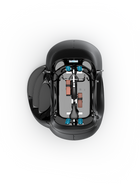
There are few experiences in modern wellness quite as gloriously bracing as stepping, in your pants, into a small chamber while the air around you is chilled to somewhere near −110°C — a temperature colder than anything the surface of Antarctica has ever managed on its worst day. A fog curls around your ankles. Someone cheerful tells you to keep moving and keep your hands out of your armpits. For two or three minutes you perform a slow, dignified shuffle, breathing in careful little sips, and then the door opens and you step out tingling, pink, grinning and faintly convinced you could lift a car. It is, in the best way, a bit of theatre — and most people climb out of it feeling absolutely tremendous.
That feeling is the whole point, and it is worth taking seriously, because it is the thing people actually come back for. Whole-body cryotherapy has become one of the most talked-about fixtures on any serious recovery floor, and once you have felt the lift for yourself it is easy to see why. So let us walk through what a session is really like, why operators love the kit, and how to choose a chamber that suits your space — cheerfully, and without the brochure hyperbole.
What a session actually feels like
Here is the reassuring part: for all the drama of those sub-Arctic numbers, air is a hopeless conductor of heat — which is precisely why a −110°C fog is a brisk, survivable few minutes when the same temperature in water would not be. Your skin gets genuinely, vividly cold, and that is exactly what sets off the fun. The cooling gives the surface of your body a sharp little wake-up call and sends a jolt through the nervous system — the same spark that makes you gasp, stand up straighter and feel suddenly, almost comically alert (Bleakley et al., Open Access Journal of Sports Medicine, 2014).
The result is that unmistakable post-cryo glow: alert, energised, a little buzzy, pleased with yourself. It is fast, it is clean, it is over before you have had time to regret starting, and it leaves most people feeling sharper for the rest of the morning. The headline health claims you will see around cryotherapy tend to run a little ahead of what has been firmly proven, and we would always rather tell you that straight — but the honest truth is that the appeal of a good session doesn’t really rest on them. It rests on how you feel when you step out, and on that score it delivers handsomely.
Fast, clean and gloriously low-fuss
Anyone who has ever run a cold-water setup will appreciate the next bit keenly. An ice bath is a wonderful thing, but it is also a quantity of water that has to be chilled, filtered, dosed, checked and eventually changed, with all the plumbing and faff that implies. A cryo chamber asks for none of that. There is no water to keep cold, no ice to haul, no tub to drain and scrub. A guest steps in dry, does their couple of minutes, and steps out dry — and the next person can be in almost immediately.
That quick, in-and-out rhythm is a genuine gift for a busy facility. It suits time-pressed members who want maximum effect for minimum ceremony, and it lets you move a lot of people through a single footprint over the course of a day. Clean, dry, quick and repeatable: for high-throughput settings, that convenience is worth as much as the experience itself.
A marquee amenity that gets people talking
There is also no getting around the sheer presence of the thing. A cryotherapy chamber is a statement. For a gym, a spa, a recovery studio, a clinic or an elite-sport setup, it is the kind of premium, head-turning amenity that marks a facility out as serious — the feature a prospective member is shown on the tour and remembers afterwards, the one that quietly ends up on everyone’s phones. It gives your front-of-house something genuinely exciting to talk about and gives members a reason to feel they have joined somewhere a cut above.
That matters commercially. A striking, much-discussed recovery centrepiece helps draw people in and gives them one more reason to stay, and in a crowded market the differentiation it buys you is real. People love telling their friends they did the −110°C thing this morning — and every one of those conversations is doing quiet work for your brand.
Electric versus nitrogen — the practical difference
There are two broad ways to make a person very cold very quickly, and the choice between them shapes how the kit lives in your space. Nitrogen chambers flood the space with vaporised liquid nitrogen; they are cheaper to build and reach the showiest temperatures, but they consume nitrogen continuously, usually leave your head poking out above the cold, and need proper ventilation and oxygen monitoring to run safely. Electric chambers chill the air with refrigeration rather than gas, which means no nitrogen to buy, store or vent, a properly enclosed full-body environment including the head, and a steadier, more repeatable temperature session after session.
For a facility running cold day in, day out, electric increasingly wins on the things that actually matter over a year of use: no gas deliveries, no consumable to meter, no venting obligations, and a cold you can trust to feel the same for the first guest and the fiftieth. It is simply less to think about — and premium kit that mostly looks after itself is the kind operators fall for.
So how do you choose a chamber?
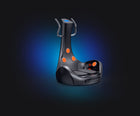
Electric, nitrogen or local? For most homes and facilities that value low fuss and a repeatable session, a modern electric chamber is the natural default: no gas to source, no venting, head-in full-body cold, and a temperature you can rely on. Our Cryo Q One and Activ Cryo V2 are single-person electric chambers built for exactly that, while the Cryo Hybrid, Cryo Total and Cryo Flow step up for higher throughput and larger installs. If you would rather treat a single sore knee or shoulder than chill all of you at once, local cryotherapy is the lower-commitment option — the Cryo Local Polar Bear does precisely that.
Home versus commercial. A single-person chamber for a home gym is a very different proposition from a unit cycling dozens of paying guests through a recovery floor, where throughput, durability, supervision and compliance all come first. For multi-unit and facility specification, our commercial cryotherapy chambers page lays out the options. If you would like to go deeper first, our Science Lab on cryotherapy sets out the physiology, and if you want to talk through what genuinely fits your space, your throughput and your members, you can book a call and we will give you a straight answer.
A friendly word on safety. The cold is real, so treat it with respect and it will treat you well. Keep sessions short and within the recommended temperature range, never use a chamber alone, and make sure nitrogen systems are properly ventilated and oxygen-monitored. Chambers should be operated by someone trained, and anyone should step out at once if their skin stings sharply or they feel faint or unwell. Cryotherapy is not suitable if you have a heart condition, high or poorly controlled blood pressure, Raynaud’s, cold allergy, are pregnant, or have any medical condition — speak to your doctor first. This article is about wellbeing and the experience; it is not medical advice, and cryotherapy is not a treatment for any disease.
The honest sign-off
Whole-body cryotherapy is a brisk, theatrical, genuinely pleasant few minutes that reliably leaves most people feeling sharper, brighter and rather pleased with themselves — and that, combined with how fast and clean it is to run and how much of a draw it is on a recovery floor, is exactly why it has earned its place. Enjoy it for what it is, keep the safety rules sacred, and if your doctor says wait, wait. Choose a chamber that fits your space and the way you will actually use it, and it will reward you — both in the faces of the people stepping out of it and in the conversations they have afterwards.
Sources
- Bleakley CM, Bieuzen F, Davison GW, Costello JT. Whole-body cryotherapy: empirical evidence and theoretical perspectives. Open Access Journal of Sports Medicine, 2014. link
- Lombardi G, Ziemann E, Banfi G. Whole-Body Cryotherapy in Athletes: From Therapy to Stimulation. An Updated Review of the Literature. Frontiers in Physiology, 2017. link